Paths are where most garden budgets go wrong, usually in one of two ways: too cheap to last, or too formal for the garden around them. The material matters, but what goes under it matters more.
Gravel
Gravel is the least expensive and the quickest to lay. It drains well and crunches pleasantly underfoot. Choose an angular stone such as crusher run or decomposed granite (round pea gravel rolls underfoot) over a compacted base, and edge it with steel or stone so it stays put. Expect to top it up every few years.
Flagstone
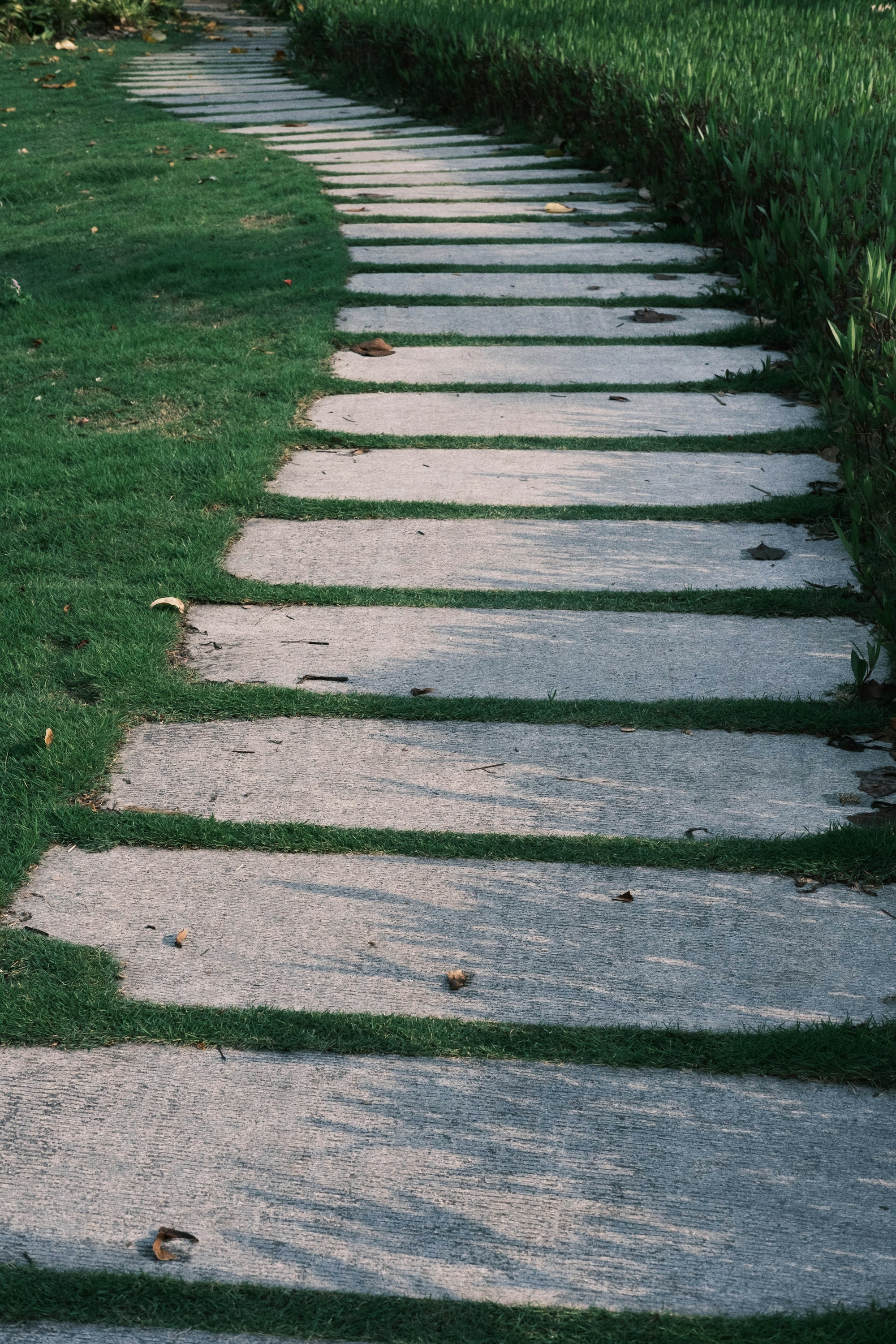
Natural flagstone looks at home in almost any garden and ages beautifully. Set dry in stone dust with gaps for creeping thyme or moss, it’s relaxed and permeable. Set in mortar, it’s formal and needs a concrete base. It costs more and takes longer, but a well-laid flagstone path outlives most of the plants beside it.
Pavers
Concrete or clay pavers give a crisp, even surface that’s easy on wheelbarrows, strollers and older knees. Permeable pavers let rain soak through rather than run off, which helps on sloped lots and with stormwater rules.
What goes under all three
Four to six inches of compacted gravel base, a fabric layer on clay soils, and a slight crown or cross-slope so water runs off. Skip the base and any of these paths will heave, sink or wash out within a couple of winters.